
Understanding Hydraulic Actuators: A Comprehensive Guide to Their Function and Working Principle
2026-11-04 News
Hydraulic actuators power heavy-duty motion control across modern industry. They turn hydraulic pressure into linear or rotary mechanical movement. If you select components for construction, manufacturing or aerospace projects, understanding hydraulic actuators helps you make better equipment decisions. This guide explains exactly what hydraulic actuators are, how they operate, their main types, key advantages and typical use cases.
What Are Hydraulic Actuators?
A hydraulic actuator is a mechanical device that converts hydraulic energy into controlled linear or rotary motion. It delivers high force output and stable motion control. That is why hydraulic actuators remain popular for heavy-load industrial machinery.
Many new buyers confuse hydraulic actuators with simple hydraulic cylinders. A hydraulic cylinder is one type of linear hydraulic actuator. The full hydraulic actuator system works with pumps, valves and hydraulic fluid to deliver repeatable, powerful movement.
How Do Hydraulic Actuators Work?
Hydraulic actuators run based on Pascal’s Law. This rule states that pressure applied to confined fluid spreads evenly without loss through the whole fluid volume. A small input force can create a very large output force with this principle.
A basic hydraulic actuator system includes four core parts:
- Reservoir: Stores clean hydraulic fluid for circulation
- Hydraulic pump: Pressurizes fluid and pushes it through lines
- Control valves: Adjust fluid flow rate and flow direction
- Hydraulic actuator: Converts fluid pressure into mechanical motion
Pressurized oil flows into the cylinder chamber. Pressure pushes the piston or internal gear. This action creates straight or rotating movement. Operators adjust valve settings to change movement speed, direction and stop position.
Main Types of Hydraulic Actuators
Hydraulic actuators fall into two primary groups: linear hydraulic actuators and rotary hydraulic actuators.
Linear Hydraulic Actuators
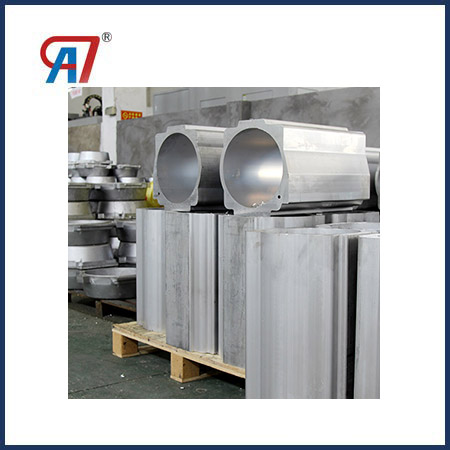
Linear hydraulic actuators produce straight push or pull motion. The most common design is the hydraulic cylinder. It consists of a cylinder barrel, piston and piston rod.
You will find linear hydraulic actuators on robotic handling arms, conveyor diverters, lifting platforms and automotive clamping tools. They excel when you need strong straight-line force.
Rotary Hydraulic Actuators
Rotary hydraulic actuators generate limited-angle rotating torque. They do not spin continuously like electric motors. Instead, they swing to fixed angular positions.
Rotary hydraulic actuators are widely used for vehicle steering, valve rotation, material grippers and swing mechanisms on industrial machines.
Key Advantages of Hydraulic Actuators
Hydraulic actuators hold clear strengths compared with pneumatic and electric actuator options.
First, they deliver extremely high force and torque in a compact footprint. This feature makes them ideal for heavy construction machines, including excavators, bulldozers and lifting cranes.
Second, hydraulic actuators support precise motion control. Operators can fine-tune speed and positioning smoothly. This stability suits automated assembly lines and precision robotics.
Third, these actuators offer solid durability in harsh working environments. They tolerate dust, vibration and heavy cyclic loads. Proper maintenance keeps hydraulic actuators running reliably for years.
Common Applications of Hydraulic Actuators
Hydraulic actuators serve many major industries:
- Construction: Excavator arms, bulldozer blades, crane lifting systems
- Manufacturing: Assembly robots, material clamps, press machinery
- Aerospace: Aircraft landing gear and flight control surface actuation
- Automotive: Heavy-duty steering systems and brake actuation units
Frequently Asked Questions
Q: What is the difference between a hydraulic cylinder and a hydraulic actuator?
A: A hydraulic cylinder is a linear type of hydraulic actuator. Hydraulic actuator is the broader category covering both linear and rotary designs.
Q: Can hydraulic actuators hold position under heavy load?
A: Yes. With properly rated control valves, hydraulic actuators can lock and maintain static load position reliably.
Q: What limits hydraulic actuator performance?
A: Hydraulic fluid leakage, contamination and seal wear are the most common limiting factors. Regular fluid filtering and seal inspection reduce downtime.
Conclusion
Hydraulic actuators are foundational motion components for heavy industry. They rely on pressurized fluid and Pascal’s Law to produce powerful, controllable movement. Linear and rotary hydraulic actuators each fill unique roles. Their high force density, stable precision and rugged build keep them the top choice for construction, aerospace and factory automation.
When you compare actuator technologies for your next project, keep hydraulic actuators on your shortlist for high-load, high-torque motion requirements.

Contact us
Add:Room 203-1, 2nd Floor, Block A, No.9 Xinqin Road, Xinwu District, Wuxi City, Jiangsu Province, P.R.China
Mobile:0086-188-5271-7918
Email:william@wxaccton.com
Website:www.actuator-china.com