
Can a partial stroke test be performed on a Scotch Yoke actuator?
2026-06-22 Blog
The Scotch Yoke actuator is a critical component in various industrial applications. Understanding its functionality and maintenance protocols is essential for ensuring optimal performance. One common question that arises is whether a partial stroke test can be performed on a Scotch Yoke actuator. This article explores the feasibility, benefits, and considerations associated with such a test.
What is a Scotch Yoke Actuator?
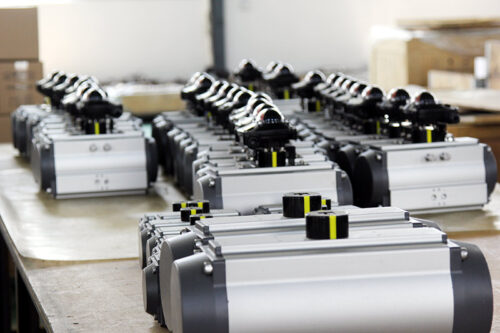
A Scotch Yoke actuator converts rotational motion into linear motion. It consists of a yoke that moves back and forth within a circular path. This design is widely used in industries requiring precise linear movement. The actuator’s robust construction makes it suitable for demanding environments. Its versatility has led to its adoption in sectors like oil, gas, and chemical processing.
Importance of Regular Testing
Regular testing of actuators ensures reliability and efficiency. Partial stroke testing is a method used to evaluate the actuator’s performance under partial movement conditions. This approach helps identify potential issues before they escalate. It is particularly useful in applications where complete stroke tests are impractical or unnecessary.
Feasibility of Partial Stroke Testing
Yes, a partial stroke test can be performed on a Scotch Yoke actuator. The design allows for partial movement without compromising functionality. This test is especially beneficial in scenarios where only a portion of the actuator’s range is required. It saves time and resources while maintaining accuracy.
Benefits of Partial Stroke Testing
Partial stroke testing offers several advantages. It reduces wear and tear on the actuator, extending its lifespan. Additionally, it helps detect misalignments or mechanical issues early. This proactive approach minimizes downtime and repair costs. Industries operating in harsh conditions can particularly benefit from this testing method.
Considerations for Implementation
Several factors must be considered when conducting a partial stroke test. The actuator’s specifications must be reviewed to ensure compatibility. Safety protocols should be strictly followed to prevent accidents. Furthermore, the test results should be analyzed to identify any anomalies. Proper documentation is also crucial for future reference.
Applications in Industrial Settings
Partial stroke testing is widely used in industrial settings. It is particularly relevant in oil and gas operations, where actuators are exposed to extreme conditions. Chemical plants also utilize this method to maintain equipment integrity. The versatility of the Scotch Yoke actuator makes it suitable for various applications, including water treatment and paper manufacturing.
Conclusion
In conclusion, a partial stroke test can be effectively performed on a Scotch Yoke actuator. This method offers numerous benefits, including extended lifespan and early issue detection. Industries across multiple sectors can leverage this approach to enhance operational efficiency. Regular testing and proper maintenance are essential for maximizing the performance of these critical components.
Value Proposition for Businesses
For businesses in industries such as oil, gas, and manufacturing, partial stroke testing is a valuable tool. It ensures equipment reliability and reduces maintenance costs. By adopting this testing method, companies can improve operational efficiency and extend the lifespan of their actuators. Investing in regular maintenance and testing is a strategic move that pays off in the long run.
Contact us
Add:Room 203-1, 2nd Floor, Block A, No.9 Xinqin Road, Xinwu District, Wuxi City, Jiangsu Province, P.R.China
Mobile:0086-188-5271-7918
Email:william@wxaccton.com
Website:www.actuator-china.com