
What are the working principles of pneumatic actuators?
2026-07-20 Blog
Introduction to Pneumatic Actuators
In industrial automation systems, pneumatic actuators play a crucial role for motion control. These devices utilize compressed air to generate force, enabling precise mechanical movements. Therefore, they are widely used in sectors like oil and gas, chemical processing, and water treatment facilities. Importantly, their efficiency stems from straightforward operating principles. Moreover, this simplicity ensures reliable performance under harsh conditions. Consequently, companies rely on them for critical valve actuation.
The Role of Compressed Air in Actuation
Compressed air systems power pneumatic actuators effectively. First, air compressors generate high-pressure streams as an energy source. Then, this air flows through pipelines into the actuator mechanisms. Additionally, regulators control pressure levels to optimize movement consistency. Subsequently, the stored energy converts into powerful strokes seamlessly. However, maintaining air purity prevents operational issues.
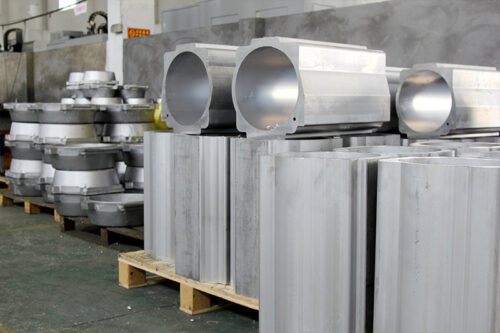
Mechanism of Valve Control
Pneumatic valve control devices manage fluid flow intelligently. Typically, solenoids or pilots direct air into actuator components safely. Furthermore, within the system, pistons or diaphragms respond instantly to input signals. For example, increased pressure pushes pistons forward decisively. Similarly, decreased pressure retracts them smoothly back. Thus, feedback loops ensure accurate positioning.
Converting Energy into Motion
Energy conversion mechanisms drive actuator motion precisely. Compressed air exerts force on internal parts like cylinders or turbines directly. Then, this force leads to linear or rotary outputs efficiently. Moreover, rack-and-pinion designs transform energy universally. Nevertheless, components must withstand frequent cycling demands. Consequently, robust materials enhance longevity significantly.
Applications Across Key Industries
Industrial automation frameworks adopt pneumatic solutions broadly. Actually, in manufacturing plants, actuators operate valves on pipelines securely. Likewise, water treatment facilities employ them for pump controls regularly. Furthermore, chemical industries value explosion-proof benefits inherently. Additionally, oil refineries integrate actuators into safety systems consistently. Undoubtedly, versatility defines pneumatic advantages clearly.
Advantages and Selection Criteria
Key benefits of pneumatic actuators include cost efficiency prominently. Initially, installation requires minimal investment comparatively. Plus, maintenance involves low-effort procedures straightforwardly. Meanwhile, energy efficiency reduces operational expenses sustainably. Still, selecting the right actuator demands careful analysis. However, consulting experts ensures optimal matchups reliably.
Conclusion: Enhancing Industrial Efficiency
Overall, pneumatic actuators simplify motion generation ingeniously. Their working principles emphasize compressed air usage intelligently. Most importantly, these devices support safe and reliable automation deeply. Consequently, industries achieve operational excellence consistently. To maximize benefits, partner with experienced suppliers proactively. Ultimately, well-chosen actuators drive productivity forward significantly.
Contact us
Add:Room 203-1, 2nd Floor, Block A, No.9 Xinqin Road, Xinwu District, Wuxi City, Jiangsu Province, P.R.China
Mobile:0086-188-5271-7918
Email:william@wxaccton.com
Website:www.actuator-china.com