
Category of Products
Contact Us
Add:Room 203-1, 2nd Floor, Block A, No.9 Xinqin Road, Xinwu District, Wuxi City, Jiangsu Province, P.R.China
Mobile:0086-188-5271-7918
Email:william@wxaccton.com
Website:www.actuator-china.com
Category of Products
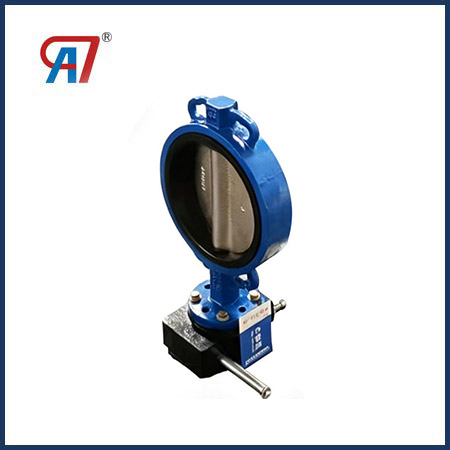
Concentric Butterfly Valves
General Introduction
First, concentric butterfly valves control pipeline cut-off and flow, and they serve oil, chemical, metallurgy and hydropower fields.
Besides, their stem, disc and body share one center line to cut production cost and balance open-close torque.
Meanwhile, the stem sits at the geometric center, and disc squeezes rubber rings to form seal via elastic deformation.
Then, the disc spins 0° to 90° to adjust flow for regular valve versions.
However, old seals fail against high heat and wear fast, so they only work under low pressure and normal temperature.
Furthermore, upgraded units mix T-type soft rings and layered stainless steel sheets for better performance.
Also, they weld high-temperature alloy on tapered seats to combine soft and metal hard sealing strengths.
In addition, built-in springs fix tolerance gaps to fit high heat, high pressure and two-way fluid transport.
Moreover, users split these valves into concentric or eccentric types with soft (EPDM, PTFE) or metal seals.
Plus, buyers pick manual, electric or pneumatic drive modes for different on-site needs.
Specifically, pneumatic types use compressed air with simple build, equal two-way seal and low flow resistance.
Hence, these pneumatic valves see wide use under working pressure below 1.6 MPa.
Additionally, installers align flanges centrally and cycle closed valves regularly to avoid sticking.
Finally, updated designs cover large-size valves with custom test tools, and some meet API 609 rules.
Structure & Working Principle
Firstly, concentric valves align stem, disc and body on one central point for easy making.
For instance, rubber-lined butterfly valves belong to this common concentric group.
Unfortunately, disc keeps rubbing seat to raise friction and speed up component abrasion.
Next, core parts include valve body, disc, stem, seat and matched actuator.
Normally, makers cast whole valve bodies and embed elastic rubber seals inside bodies.
After that, the centered stem turns the disc 0-90 degrees to fully open or shut the valve.
Also, streamlined disc shapes cut flowing resistance inside the whole pipeline path.
Meanwhile, sleeve bushings inside body holes hold and lubricate the rotating valve stem.
Whereas, rubber or PTFE seat materials limit usable temperature for ordinary butterfly valves.
As a result, most users think regular butterfly valves cannot handle high working temperature.
Once closing the valve, spinning disc presses rubber seats and forms seal through rubber flexibility.
Namely, this sealing style counts as compression soft seal for daily working conditions.
Take handwheel operation as an example; operators twist wheels clockwise or counter-clockwise.
Then, the stem turns disc around 90 degrees to open or close valves with little physical effort.
Application Range
Primarily, these valves carry clean water, sewage, fuel gas and other gases inside industrial pipes.
Besides, they adjust or block fluid in water plants, power plants, steel mills, paper and food factories.
Especially, pneumatic concentric valves feature symmetric I-shape with identical two-way sealing effect.
Moreover, they bring low flow resistance and small switch torque for medium and low pressure scenes.
Therefore, such pneumatic valves gain massive application under pressure below 1.6 MPa.